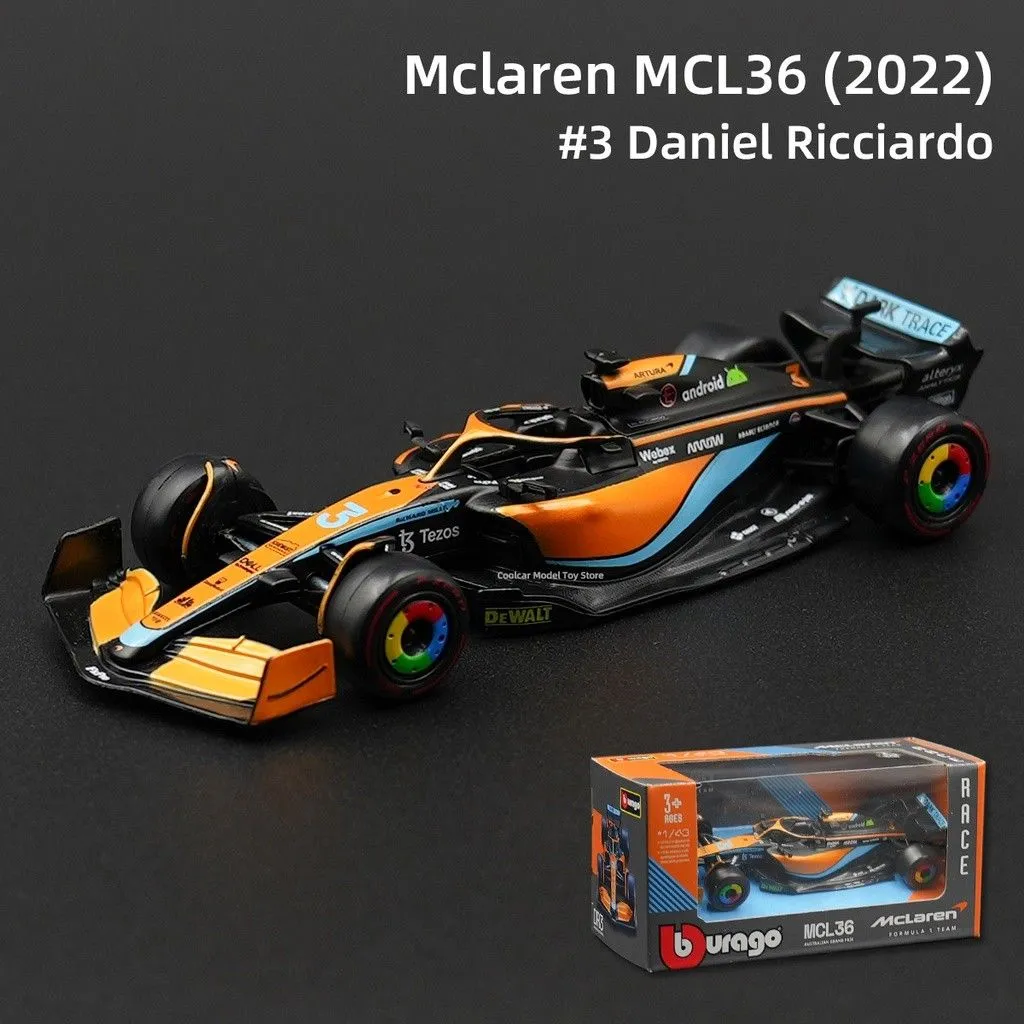
The world of Formula 1 diecast cars is a captivating hobby, attracting enthusiasts who are passionate about racing and meticulous about detail. These miniature replicas offer a tangible connection to the high-speed world of F1, allowing collectors to own a piece of motorsport history. From the iconic designs of legendary teams to the sleek lines of modern machines, F1 diecast cars capture the essence of speed, engineering, and competition. This article delves into five fascinating facts about F1 diecast cars, providing valuable insights for both seasoned collectors and those just starting their journey into this exciting hobby. Explore the history, materials, scales, and valuable aspects of these miniature marvels, and discover how to start or enhance your own F1 diecast car collection. Uncover the secrets and enjoy the thrill of owning a piece of the fast-paced F1 world!
Top 5 Facts About F1 Diecast Cars
The History of F1 Diecast Cars
The history of F1 diecast cars is as rich and dynamic as the sport itself, with early models appearing shortly after the Second World War. Initially, these were relatively simple toys, designed more for play than for detailed accuracy. However, as the popularity of Formula 1 grew, so did the demand for more realistic and detailed models. Early manufacturers like Dinky Toys and Corgi were among the first to produce F1 diecast cars, laying the foundation for the hobby. The initial models focused on the iconic cars of the era, such as the pre-war Auto Unions and Mercedes-Benz Silver Arrows, and the later models of the 1950s and 1960s. The evolution of these models mirrored the changing designs of the real race cars, from the cigar-shaped vehicles of the early days to the more aerodynamic designs of the modern era. Early collectors often sought out these vintage models, which are now highly sought after and valuable.
Early Models and Manufacturers

The early models of F1 diecast cars were primarily produced by a few pioneering manufacturers. Dinky Toys and Corgi were two of the most influential, setting the standard for detail and accuracy in the early days. These manufacturers focused on recreating the iconic cars and drivers of the era. The early models were typically made of diecast metal, with simple paint schemes and basic detailing. These models often featured solid wheels and minimal moving parts. Despite their simplicity, these early models were highly popular, and they helped to establish the foundation for the diecast car collecting hobby. The manufacturers were quick to update their models with the latest designs, ensuring their products mirrored the exciting developments in Formula 1. These early models are now valuable collectibles.
Evolution of Detail and Scale
As time passed, the level of detail and the accuracy of scale in F1 diecast cars dramatically improved. Manufacturers began to incorporate more intricate details, such as realistic decals, detailed engine components, and finely crafted interiors. This evolution was driven by advancements in manufacturing technology and a growing demand from collectors. The introduction of more complex molds allowed for the creation of more accurate body shapes and designs. The use of higher-quality paints and materials also contributed to the improved realism of the models. The scale also played an important role in this evolution, with different scales offering varying levels of detail. As the hobby has matured, manufacturers have focused on producing models that are not only accurate representations of the real cars but also feature a high level of craftsmanship.
Materials Used in F1 Diecast Cars
The materials used in crafting F1 diecast cars play a vital role in their quality, durability, and aesthetic appeal. The choice of materials influences both the look and feel of the models, directly affecting their value and desirability among collectors. These materials contribute to the realistic appearance and the long-term preservation of these miniature representations of automotive excellence. The principal materials used include diecast metal for the main body components and various plastics and composites for other parts. Each material is selected for its specific properties and contribution to the overall quality of the model.
Diecast Metal

Diecast metal is the cornerstone material for most F1 diecast car bodies. This material provides the necessary weight and structural integrity for the models. The diecast process involves injecting molten metal alloys, typically zinc, tin, and aluminum, into molds. After cooling, the metal solidifies, taking the shape of the mold. This process allows for intricate detailing and precise replication of the car’s body shape. Diecast metal provides a robust and long-lasting foundation for the model. The weight of the diecast metal gives the models a solid feel and enhances their visual appeal. The use of diecast metal is a mark of quality, signifying the model’s durability and collectibility.
Plastic and Composite Materials
In addition to diecast metal, plastic and composite materials are widely used in the construction of F1 diecast cars. These materials are employed for smaller parts, such as wings, spoilers, mirrors, and interior details. Plastic components are often injection-molded, allowing for intricate shapes and designs. The use of plastic enables manufacturers to achieve high levels of detail, such as complex aerodynamic elements and the intricate designs of the cockpit. Composite materials, such as carbon fiber, are also used to replicate specific components of the real cars, particularly in higher-end models. The use of these materials enhances the realism and accuracy of the models. The combination of diecast metal and various plastics and composites allows for a comprehensive and detailed representation of F1 race cars.
Popular Scales of F1 Diecast Cars
The scale of F1 diecast cars is a crucial aspect of their appeal, affecting the level of detail, size, and overall collectibility. Different scales cater to different preferences, each offering unique advantages. The scale refers to the ratio between the model’s size and the actual size of the car. Common scales in the world of F1 diecast cars include 1:18 and 1:43, with some models available in 1:12 or 1:24 scales for those seeking even greater detail and size. Each scale offers a different visual experience and affects the price and availability of models. Understanding the scales is essential for collectors to select models that fit their personal preferences and display requirements.
1:18 Scale Models

1:18 scale models are among the most popular choices for collectors. The larger size allows for a high level of detail, including detailed engine compartments, accurately replicated cockpits, and intricate aerodynamic elements. The extra space enables manufacturers to include a greater number of moving parts, such as opening doors and working suspensions. 1:18 scale models make a bold statement in any collection. Their size allows collectors to appreciate the craftsmanship and detail. These models are often more expensive than smaller-scale models, but they are considered a worthwhile investment by many collectors. The availability of accessories and display cases further enhances their appeal.
1:43 Scale Models
1:43 scale models represent the most common scale for F1 diecast cars, and the compact size offers several advantages. These models are more affordable, making them accessible to a wider range of collectors. Their smaller size also makes them easier to store and display, and they require less space. Despite their smaller size, 1:43 scale models can still feature a high degree of detail, and manufacturers strive to replicate the features of the real cars. This scale is ideal for those who want to build a comprehensive collection without dedicating a vast amount of space. A collection of 1:43 scale models often provides a diverse and visually appealing display.
The Most Valuable F1 Diecast Cars
The value of F1 diecast cars varies greatly, influenced by several factors. Limited editions, rare models, and those associated with significant racing events often command high prices. The demand from collectors and the availability of the model play a major role in determining its value. Certain models can appreciate significantly over time. The price of a diecast car is not just about the materials or the scale, but also about the historical significance, the condition, and the model’s rarity. For collectors, identifying and acquiring valuable models is a significant part of the hobby, and the potential for investment adds to the excitement.
Limited Editions and Rarities

Limited edition F1 diecast cars are highly prized among collectors, because they are produced in a limited quantity. These models are often created to commemorate specific events or achievements in Formula 1 history. Limited editions can include cars driven by legendary drivers, models celebrating championship wins, or those released in collaboration with famous brands. Their scarcity makes them more valuable. The low production numbers increase the demand. The limited availability can lead to significant price increases over time. Rare models from discontinued manufacturers also hold value. The exclusivity of these models is a major attraction for serious collectors. They are often seen as the crown jewels of a collection.
Factors Affecting Value
Several factors influence the value of F1 diecast cars. The model’s condition is one of the most important determinants, as models in pristine condition are worth significantly more than those with damage or wear. The original packaging is also important. The inclusion of the original box and any included accessories can enhance the value. The manufacturer and the level of detail in the model play a significant role, with well-known brands and highly detailed models commanding higher prices. The historical significance of the car, such as its association with a winning driver or a memorable race, is another crucial factor. Collectors often seek out models that represent iconic moments in F1 history.
Collecting Tips for F1 Diecast Cars
Building an F1 diecast car collection is a rewarding hobby, but it requires some knowledge and planning to maximize the enjoyment and potential value of your collection. Beginning collectors should start by researching and identifying the brands and scales they are interested in. Determine your budget, as the cost of collecting can vary widely depending on the scale, brand, and rarity of the models. Set clear goals for your collection. Decide whether to focus on specific teams, drivers, or eras in F1 history. Build a network of fellow collectors. This is a great way to find rare models and learn from more experienced collectors. A well-planned approach will ensure your collection is both enjoyable and potentially a valuable asset over time.
Where to Buy F1 Diecast Cars

There are several avenues to buy F1 diecast cars. Specialist model shops are a great place to start, and they offer a curated selection of models. Online marketplaces provide a vast range of options, but it is important to be careful about the authenticity and condition of the models. Auction sites can also be a good source. They often feature rare and vintage models. Attending model car shows and events is another way to expand your collection. You can meet other collectors and dealers. Each of these options has its pros and cons, so it is best to explore different avenues to find the best deals and the models you want.
How to Display and Preserve Your Collection
Proper display and preservation are essential for protecting and showcasing your F1 diecast car collection. Display your models in a way that protects them from dust, sunlight, and other environmental factors. Display cases with glass or acrylic covers are a great solution, providing protection while allowing you to admire your collection. Protect your models from direct sunlight. Excessive exposure can fade the paint and damage the decals. Store your models in a cool, dry place away from extreme temperatures. Cleaning your models regularly is important. Use a soft cloth and avoid harsh chemicals to remove dust and dirt. By following these preservation tips, you can ensure your F1 diecast car collection remains in excellent condition for many years to come.
In conclusion, the world of F1 diecast cars is a captivating hobby with a rich history and a passionate following. The combination of scale accuracy, historical significance, and the thrill of collecting makes it a rewarding pursuit for enthusiasts of all ages. This article has explored five key facts about F1 diecast cars, from their origins and construction to the factors that influence their value. By understanding these facts and applying the tips provided, collectors can enjoy a fulfilling and potentially lucrative hobby. Whether you are a seasoned collector or just starting, the world of F1 diecast cars offers endless opportunities for enjoyment and discovery. So, embrace the thrill of the race, and start or enhance your own F1 diecast car collection today!